spider plant – curly spider plant 2024 – housegreenry
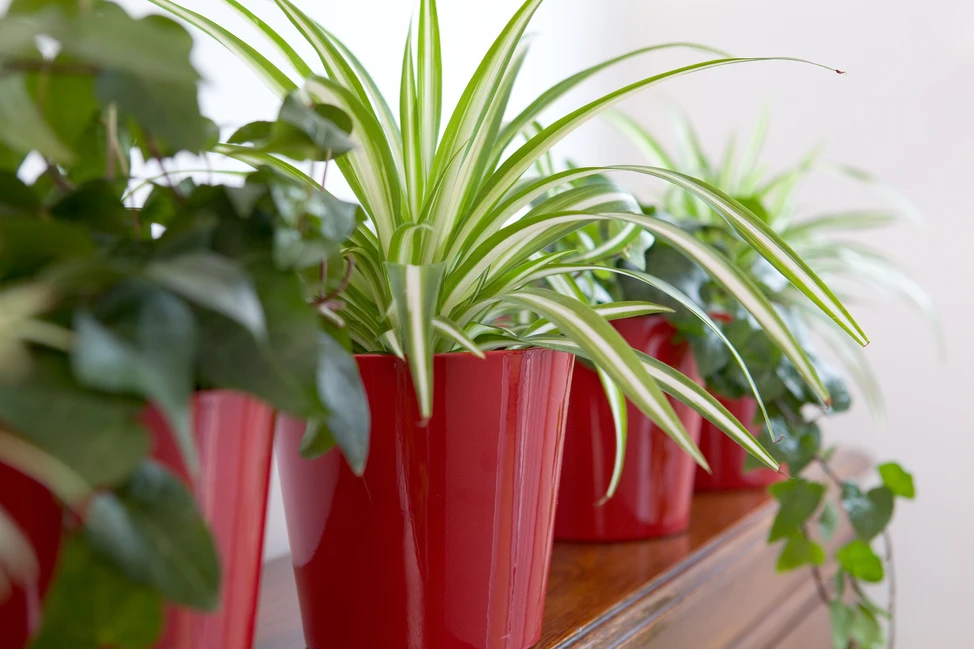
Spider plants Spider plants are the most common and well-known of all houseplants. It is especially popular with beginners, being easy to grow and propagate, tolerant of desertion, and able to thrive in nearly any illness. It gets its common name from the small plantlets produced on long, straggling stems that vaguely resemble spiders. This clump-forming, constant herbaceous plant, native to coastal areas of South Africa, has narrow, strap-designed leaves arising from a central point. The leaves may be solid green or rainbow with lengthwise stripes of white or yellow. The leaves are not flat but appear channeled or pleated down the middle. curly spider plant Plants grow 12–15″ tall. The thick, fleshy roots curly spider plant and tubers evolved to store water, allowing it to endure inconsistent watering. Long, wiry stems up to 2 feet long are shaped, sometimes with a few small leaves, especially in response to short days and long, continual nights for at least three weeks, although they may look at any time of year indoors. Small white, star-shaped flowers are shaped at the ends of the stems. After flowering, more leaves are produced at the end of the shoots, forming small plantlets. A flower is fertilized, a leathery, 3-angled capsule-type fruit that covers flat black seeds. Studies have revealed that spider plants are quite effective in cleaning indoor air by captivating chemicals including formaldehyde, xylene, benzene, and carbon monoxide in homes or agencies. Spider plants indoor Spider plants indoor to bright light throughout the year. It does well with average moisture and cool to average temperature, though it can tolerate warmer conditions. Use a general-purpose hitting soil or soilless medium. Harvest plant Plants and harvest plant are best when slightly pot-bound. Because they grow and the roots can easily become too crowded, they need frequent replanting to do their best. Spider plants mostly have few pest problems other than scale insects and mealybugs. Tip burn of leaves is a public problem that can have many causes. It does well in most well-tired soils and should be bedded out after the last frost. Spider plants are a good addition to containers with grass-like shrubbery that makes a nice disparity to other foliage types. It is quite well suited to a hanging basket, where the stems can dangle. Outdoors Outdoors, need bright light but can sunburn if grown up in full sun. In warmer climates, they make a nice milled cover in partly shaded areas in the garden. Spider plants are extremely to broadcast by planting the “spiders” or plantlets that flourish the flowers in their pots. Set the plantlet, still devoted to the mother plant, on the surface of a pot filled with soilless potting average and allow it to root before severing the stem linking it to the mother plant. A bent paper clip or wire can hold the plantlet in connection with the soil until it grows roots. Or, select a plantlet that has already started to mature roots and pot that up. Flowers Flowers can also be adults from seed, but the seedlings will not necessarily have the same leaf coloring as the parent. Some varieties contain: ‘Milky Way ’ leaves with green limits and a broad white to cream center, making a much lighter overall appearance than other cultivars. ‘Vittatum’ has dark green leaves with an extensive, creamy white stripe down the midpoint of each leaf. ‘Variegatum’ has rather broad green leaves with white margins. This cultivar tends to harvest fewer plantlets than other types. White Stripe White Stripe’ has a thin white-to-cream line down the central leaf vein that is lost as the leaf ages. The flower shoots are cream to yellowish instead of the usual green. If a spider plant summons up images of college dorm room décor, it’s one of the best houseplants for learners and one of the easiest to circulate and share. As trendy today as it was competitors ago, the spider plant creates a living mobile when put in a hanging basket, where its baby spiders, or “siderites,” can dangle freely from their long, arching stems. Houseplants If you thought all spider plants were the same, you are delighted to discover that the attractive, fountainlike greenery comes in assorted color variations and forms, including a cultivar with curly leaves. And though they are usually grown indoors, spider plants can also flourish outdoors when given the right situations. Spider plants are so incredible to propagate that you will soon be charitable to the offspring of all your friends and neighbors. Home plants Home plants are several surefire means you can use to grow new plants from your siderites. Keep the soil steadily moist until you begin to see new leaf growth. You can also eradicate the plantlets before the roots have fashioned and set them in a glass of water, being cautious not to submerge the foliage. After they grow roots, you can pot them up for sharing. Use a few of the spiderettes to make the parent plant look fuller by planting them in the soil alongside it and letting them take root.