
Plants
Plants are divided into the years it takes to complete their life cycle. The three common groups encompass annuals, biennials, and perennials—annual plants flower throughout the growing season. Biennials typically flower during the second year of growth. On the other hand, perennials may bloom anywhere between 2 to 8 weeks or even more as it depends on its timing whether it blooms in the beginning, middle, or at the end of the growing season.
Patio Plants
Consider a variety of plants ideal for a patio and a planter-they could add splashes of color and life to your outdoor space throughout the year. From pre-grown to plant, to grow yourself, there’s an abundance of options to brighten the patio and the planters with vibrant colors and textures.
With our wide and value-for-money patio plants, a garden, balcony, or deck can easily find the right additions that support beauty, structure, and fragrance. Patio plants are perfect for small places like balconies or terrace gardens. Everything-from topiary and bamboo to bedding plants, grasses, climbers, exotic varieties, and even dwarf fruit trees-is at your disposal.
Others can provide focal points by growing tree varieties such as Japanese Maples and flowers in large pots. Flowers that fall over the edges of containers can also make very beautiful displays, providing that wow factor to your garden.
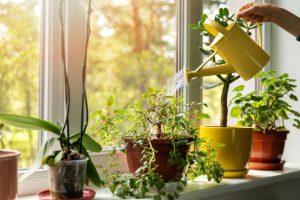
Annuals
These complete their entire life cycle in a year. The typical annuals is sown in spring, flowers the following summer, and dies by fall. Some of these are called winter annuals because they begin growing late in the summer or during the fall, survive the winter as a seed inside a seed covering, and resume growth the following spring and summer. In northern regions such as Pennsylvania, some plants referred to as annuals are perennials in warmer climates. They are not cold-hardy enough to survive cold winter temperatures in hardiness zones 4b through 6b, with average winter lows ranging from -25°F to 0°F.
Hardy annuals
1 Add plants such as pansies, ornamental kale, or dusty miller
2 Cold resistant; hard frosts; cold soil
3 May be winter hardy, and may be able to survive winter temperatures if sown in the fall, depending on the severity of the winter.
4 They are suitable for cool-weather gardens even though they often die during the heat of summer.
Half-hardy annuals
1 Snapdragons, petunia, alyssum should be added.
2 Can tolerate a minimum amount of cold temperature and light frost. However, when sown early in the season, if the seed germinates, an even mild frost would harm the seedlings.
3 Even summer heat can induce half-hardy annuals to decline, but cooler temperatures of fall seem to revive the plants, often with a burst of growth and blooming.
Tender annuals
1 Include impatiens, vinca, and zinnia.
2 Not resistant to freezing temperatures.
3 It should only be sown outdoors after the danger of frost is passed.
4 Seed is often sown in a greenhouse in spring and grown into small plants to be transplanted after the last frost in the garden.
5 Will be fairly healthy and flower during the hot part of summer.
The same plant might be grown as a hardy annual, or even used like a hardy biennial or perennial in the lower Delaware Valley area of southeastern Pennsylvania. Yet these same plants may only be considered a half-hardy or tender annual in the Laurel Highlands of southwestern Pennsylvania.
Perennials
Perennials for landscapes in Pennsylvania are hardy enough to withstand winter temperatures so they live longer than annuals and biennials. There are two basic types of perennials: herbaceous and woody.
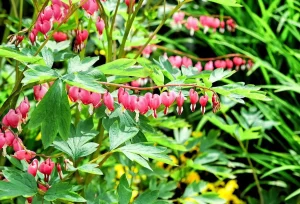
Characteristics of herbaceous perennials include
With the feature of the top growth that dies completely in the winter, but the roots and crowns remain in an alive state.
Plants produce new shoots in the following spring.
Typical life span of at least two years.
Herbaceous perennials that are sensitive to cold or cannot survive extremely cold temperatures are likely to perish after the freezing of their soil. In most cases, these types of perennials are generally grown as annuals.
Bulbs
Bulbous plants are bulbs, tubers, corms, or rhizomes. True bulbs are fleshy food storage centers for underground stems from which the next season’s plants will grow. Corms, too, are food storage centers but are more scaly and solid. Rhizomes and tubers, on the other hand, are thick underground stems. For proper classification, this group falls into the perennial flowers because bulbous plants come back and flower every year.
Outdoor Plant
Plants that grow and reproduce in open air and directly under sunlight are called outdoor plants. The most commonly occurring types include trees, shrubs, flowering plants, non-flowering plants, and succulents. Several such plants may be grown indoors but thrive when planted outdoors with natural sunshine, light shade, rich soil nutrients, and plenty of water. Originally, all plants grew outside; however, some are now qualified as indoor plants as they don’t tolerate cold temperatures very well and need more years to reach maturity, even though they can grow well in pots.
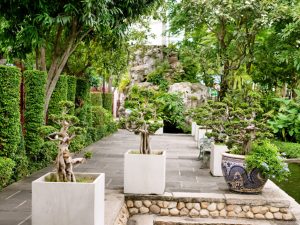
spider plant
Who has not appreciated this popular favorite from the plant world, known as the spider plant, for its striking appearance and low maintenance? From tropical and southern Africa, these perennials have arched leaves that are nice-looking either on a table or hanging. Spider plants are fast-growing with many offshoots, which makes them easily propagated.
According to plant expert Jackie Pinkston, spider plants are good for any kind of plant lover, whether a newbie or an old pro. She brings them forward as air purifiers that eliminate indoor pollutants, such as formaldehyde and xylene. Therefore, they appeal, with their swaying leaves and miniature plantlets at the ends. These features make them quite versatile and low maintenance for most homes.
Indoor plants
Houseplants or indoor plants are plants that grow in the house office. They usually require low water requirements and light, and they are typically grown in pots or containers. Many indoor plants are chosen for their aesthetic and ornamental purpose and have little maintenance; these include succulents, cacti, ferns, begonias, and palms. These are popular because they can easily be adapted to indoor conditions.
If all the right factors are provided, then indoor plant care is easy; the main contributing factors, that determine the health and growth potential of plants, are light, temperature, water supply, humidity, quality of soil, and proper fertilization.
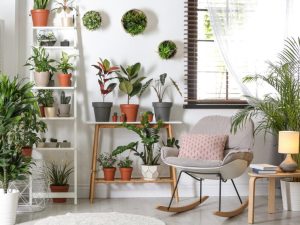
plant pots
The pots are primarily used for growing and caring for indoor and outdoor plants. They give a contained environment to the roots, hence giving the plant space, water drainage, and essential nutrients. Pots come in different materials; they are mainly made from plastic, ceramic, terracotta, and metal, and each material performs a different function by providing certain benefits according to the kind of plant it supports and its needs. It can be built into the pot at the bottom, or a layer of pebbles or water may be necessary to place in a separate saucer. The selection of an appropriate size and material, for pots, is very important for the development and overall health of a plant.
zz plant
The ZZ plant, also called the Zamioculcas zamifolia, or more poetically, the Zanzibar gem or Emerald palm, is small to medium sized, and easy to care for inside, adding bright green color to any room. From South Africa, the ZZ plant was popularized as an indoor house plant in the 1990s through Dutch growers, one of the first to propagate and sell it to the United States. It grows upright with elegant, arching stems that are filled with fleshy, oval-shaped leaves, giving it a feather-like appearance. The base of the stems enlarges while emerging from below the soil in the form of starchy rhizomes.
Houseplant
House plants or household plants beautify and purify homes. They come in all shapes and sizes from big, leafy plants to tiny succulents. You’ve got your bright, sunny spots and the more shaded areas, but in each case, there’s an appropriate house plant; whether it is a house plant for dry conditions or a bathroom location.
Indoor plants are also said to have emotional and psychological benefits and cleanse the air. Some plants even absorb toxins furniture sometimes gives out. Research the needs of the house plant you choose before purchasing to make sure it will do okay in your home. Most house plants prefer bright indirect light but keep house plants out of direct sight of radiators, fireplaces, or air conditioning units.
Proper care is important, and different plants require different things. Do not water too much, as this is just as deadly to underwater as to overwater – water only when the top layer of soil feels dry. Many indoor plants also appreciate extra humidity, which you can create by misting them regularly. In spring to autumn, when your plants are actively growing, they should be fed about once a month with a plant-specific fertilizer. The one requirement most house plants present during winter time is to minimize water and food as the plants hibernate.
While picking a house plant, it is important to remember the lighting and moisture levels that prevail at your place. For instance, cactus plants that love the sun won’t enjoy a dark room, and tropical plants that enjoy moisture thrive well in bathroom conditions. Having some basic research done before buying the plant, it is ensured that it would get the right environment and thrive.
hi mate good job
HI Thanks bro
Good job
Thanks
beautiful blog
Thanks